Saturday, October 13, 2018

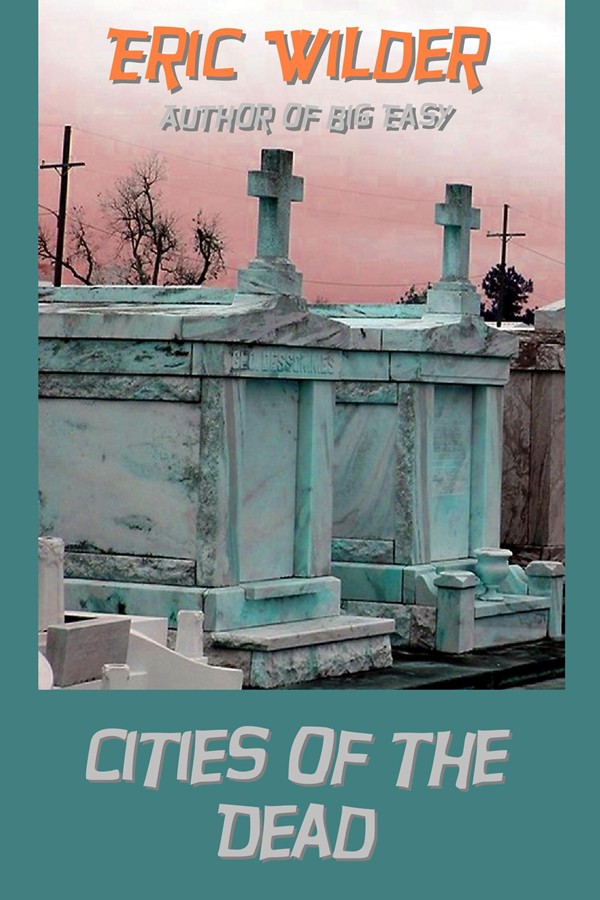
Cities of the Dead - a short story

INTRODUCTION

I’ve long been a fan of short stories and penned my first attempt at the genre when I was only ten. I continued writing short fiction during high school and college, though none of the stories managed to survive the years. I can’t remember when I wrote my first short story featuring French Quarter sleuth Wyatt Thomas, but it was long before the publication of Big Easy in 2006. Once I started, I found it all but impossible to stop.
~SPOILER ALERT~
When I decided to write Big Easy, my first novel-length French Quarter Mystery, I did so by combining parts of three New Orleans’ short stories: Cities of the DeadVoodoo Nights, and Pontchartrain. If you haven’t read Big Easy and are considering doing so, then you should probably start it first before reading Cities of the Dead.
If you’ve already read Big Easy, then you might get a kick out of Cities of the Dead as it’s different in many ways than the side-story in the novel.

Cities of the Dead

Darkness draped Rue St. Ann as throngs of French Quarter tourists crowded the entrance to a Creole townhouse. Heat radiating from the stoop bothered Lieutenant Tony Nicosia. He mopped his brow as he watched paramedics remove two stretchers from the premises. The old man occupying one of the stretchers didn't notice the heat.
*  *  *
It started with Buddy DeJan's wake. Buddy was nearing seventy when a heart attack claimed him in his sleep. His wife Foxy called a wake for him at their house, near the spot where the Mississippi River meets the Gulf—the literal end of the road. I attended the wake with Buddy's cousin, Bertram Picou. As lights disappeared in our rear-view mirror, sub-tropical vegetation and endless splay channels gradually replaced them. Soon, there was no sense of civilization at all as scrub oak and cypress knobs replaced jazz and musty mortar.
Distraught over his cousin's death, Bertram tippled Cuervo and sniveled all the way from the City. Having my own memories of Buddy and little patience for Bertram's stories I'd heard all before, I stared out the window, trying to block out his mindless chatter. When we reached the wake, his bottle was already empty.
Foxy and Buddy lived in a fishing camp beside a murky channel that snaked into the Gulf. Wooden stilts raised their house above a soggy yard marked by muskrat hides, catfish bones, and flat-bottomed fishing skiffs. By midnight, the occasion had turned festive, with Bertram leading the charge. A black dress swathed Foxy DeJan’s large frame. She had long since discarded her shawl of mourning. Like many of the mourners crowding the room, she clasped a half-empty glass of bourbon in her hand.
Black crepe-paper draped the front door, and clocks were stopped to coincide with the time of Buddy's passing. All mirrors faced the wall. Lying in his mahogany coffin, Buddy seemed more resplendent than in life. I slipped out of the house, seeking solitude in the darkness below. My trance shattered abruptly when someone tapped my shoulder.
“I didn't mean to startle you,” the young woman said.”
“Guess I was thinking about Buddy.”
“I see that. I'm Celeste Duples. Mr. DeJan and my Father were distant cousins.”
“Wyatt Thomas,” I said. “I didn't know Buddy had any relatives named Duples. You from around here?”
“I grew up in Philadelphia with my mother. Now I live in Starkville. Daddy sells real estate. I teach at the college there. And you?”
“I have a place in the Quarter and do odd jobs for people.”
“Such as?”
“Look up this. Research that. Most anything to earn a buck.”
I stepped into the beam of the floodlight suspended from the roof. Celeste's green eyes sparkled in the light. She was tall, fully five-eight, and had jet black hair and an olive complexion that left little doubt of her French Acadian ancestry.
“This wake seems so strange to me.”
“Ritual,” I said. “A mixture of Catholic, Protestant, and Judaism, with a smidgen of black magic from Africa and voodoo from Haiti.”
Dueling strains of mandolin and accordion, saturating the damp air with a Cajun melody and silencing the chorus of frogs, floated down the stairs. A shooting star streaked across the sky, disappearing over the horizon.
“Buddy's wake will be a party before morning.”
“I won't last that long,” Celeste said.
“I wish I could leave, but I rode down with one of Buddy's closest cousins. He won't stop grieving till he OD's on Cuervo.”
My description of Bertram's alcoholic inclinations amused Celeste. Leaning closer, she said, “We'll take you back.”
I needed very little persuasion. After paying my last respects, I joined Celeste and her father in the driveway. He had the same strange last name as his daughter, and she called him Maurice.
Celeste's maroon convertible left no chance for conversation. The breeze it produced was welcome after the smoky wake. I'd recently moved into an apartment over Bertram's bar. When Celeste and her father dropped me off, I didn't expect to see them again. I was wrong.
***
Lady, Bertram's collie licked my hand, relieving any guilt about missing Buddy's funeral. Next morning I opened the bar for him, even managing to turn a small profit. Bertram showed up at noon. Hung-over and head pounding, he went straight to his apartment in back. I kept working until five when Maurice Duples strutted through the front door.
Back-dropped by bright sunlight, he seemed different from the man whose shoulder I had pressed all the way back to the City. Although still wearing the same tweed sports coat, he had changed pants, shirt, and shoes. Now he sported combed gray hair and a fresh shave and greeted me by squeezing my hand in a vice-like grip.
“I was hoping I'd find you here,” he said.
“Bertram's under the weather. I help out when I can.”
“Celeste said you were a good man.”
Celeste's praise secretly pleased me. “You aren't here to commend me on my benevolence. What can I do for you?”
Surprised by my directness, Duples gazed around Bertram's bar. “Celeste says you know a lot about New Orleans burial rituals.”
“No more than anyone else in the City.”
“Am I correct in thinking you make a point in knowing things others don't?”
“Maybe.”
“Several people at Buddy's wake told me so. I’d like to visit a grave and thought you might be of assistance. I have no earthly idea where to find it.”
“Then you're in trouble,” I said. “The city has dozens of cemeteries.”
“Precisely why I need your help. I'll pay your fee.”
He sat on a stool and sprawled his elbows on the zinc countertop. Exhaling, he rested his head in his hands.
He smiled when I said, “You look like you could use a drink.”
Maurice Duples was tall and slender. Thirty-five or forty years older than his daughter Celeste. I guessed his age at sixty-five or seventy.
“Red wine,” he said.
When I set the glass in front of him, he seemed almost asleep, his left hand dangling off the counter. Lady's warm tongue revived him, and he patted her head before sipping his wine.
“Interesting place,” he said, noting the severed ties, bras, panties and other intimate undergarments draped from the ceiling and mirror behind the bar.
“New Orleans is an easy place to lose your inhibitions.”
Duples smiled for the first time since I'd met him. “Celeste was conceived here. During a particularly eventful Mardi Gras.”
“She said you live in Mississippi.”
“Born in New Orleans. My mother worked for a man named Duplessis. We lived with his family until she died. An aunt from Starkville took me in. I never knew my father or mother's burial place. I'm desperate to find her grave. Will you help me?”
I topped up his glass and said, “Anything else you remember about New Orleans?”
“Is that a yes?”
“Look, Mr. Duples, you don't need me. If you know your mother's name and her approximate date of death, you can go over to the Notarial Archives in the basement of the District Court and find where she's buried.”
“Tried that already. The two investigators I hired found nothing. If you can't help me, I don't know where I'll turn.”
“Why don't you tell me everything you remember and I'll do my best to help you.”
The look of desperation melted from Duples' face. When he latched on to my hand with both of his, I had the sudden sensation I was saving a drowning man.
“Thank you, Mr. Thomas, thank you.”
I poured myself a glass of lemonade from the stash under the counter and said, “Let's go to a booth and talk.”
Duples and Lady followed me to the back of Bertram's bar. Most of Bertram's regulars never appeared before nine or ten at night. The place was empty.
“Now tell me what you remember.”
“Nothing much,” he said. “I was eleven when they buried her. Guess I’ve blocked most of the details from my memory.”
“Rest your head and relax. Close your eyes and focus on the muscles in your face. Imagine you have a warm towel resting there.”
Maurice Duples followed my suggestions, soon sinking into a low-grade trance. I continued speaking in modulated tones until his breathing and heart rate reduced to barely a whisper.
“You're a child again, at your mother's funeral. Tell me what you see.”
Duples began reciting in the high-pitched voice of an eleven-year-old.
“Rows of rectangular structures topped with crosses and Greek statues. Beautiful flowers with colors and smells you can almost feel, amid wide streets separating the structures. I see an impatient horse, snorting and kicking up grass with his hoof. He's pulling a black carriage. It's almost like a city. Everyone is crying, and dressed in black.”
“Is there a special statue you see, or maybe a nearby name you can read? Anything specific you remember?”
“Yes,” Duples said. “Hundreds of x marks on one of the structures.”
Bingo. Having all I needed, I woke Duples from his trance.
“Amazing,” he said. “I feel wonderful. Better than I have in years. And I remember things now.”
“You never really forgot. You just had them blocked.”
By now, Bertram was awake and cleaning up the bar with a wet rag. A few afternoon patrons straggled in, along with a curious sightseer or two. A street band, hoping to evoke donations from the throng of tourists filing into the French Quarter, fired up a hot jazz number outside. Maurice Duples was smiling.
“I haven't visited the cemetery since Mother's funeral. Now, I remember it vividly. It was almost like a little town, with rows of houses and narrow streets.”
“That's why they're called Cities of the Dead. Since much of New Orleans is below sea level, the water table is close to the surface. Before the City set up a drainage system, the only recourse was to bury their dead in a puddle of water, or else above ground.”
“You said you knew where to find my mother's grave.”
“I know exactly where it is, in the St. Louis Cemetery # 1, over on Basin Street.”
“Pardon my skepticism, Mr. Thomas. How can you be so sure?”
“Number One is the oldest cemetery in the City. Many famous people are buried there—Etienne Bore, father of the sugar industry, and Homer Plessy, to name a couple. You may remember the pivotal cemetery scene from Easy Rider. It was filmed in the St. Louis # 1.”
Duples didn't seem to know about Easy Rider or the two names I'd mentioned.
Homer Plessy?”
“Plessy v. Ferguson. An 1892 Supreme Court decision establishing separate-but-equal Jim Crow laws for blacks and whites in the South.”
“Sorry,” Duples said. “I'm in real estate, not a first-year law student.”
Biting my tongue, I refrained from asking if he could read. Instead, I continued my explanation.
“Many of the rich and notables had expensive and ornate tombs built for their families. It's not uncommon to see forty-foot tall Greek statuary or tons of carved and polished stone. I was hoping you would remember a landmark tomb.”
“But I didn't.”
“Yes, you did. You remembered seeing the most famous tomb in New Orleans—the crypt of Marie Laveau, queen of voodoo.”
Light from the jukebox reflected off Duples’ deep green eyes.
“Take me there.”
“We'll go tomorrow.”
Duples folded his arms and shook his head. “I won't wait another day. Let’s go now.”
“Impossible. It's near the Iberville Project and crime is rampant there. Even tomorrow we'll need to go with a group.”
“Not on your life, Mr. Thomas. I have a thousand dollars. It's yours if you take me now. If you don't, I'll find someone else who will.”
Before I could answer, the educated voice of Celeste sounded from behind us.
“Such wild expressions on your faces, you both look ready to fight.”
***
After leaving Duples' irresistible money with Bertram for safe-keeping, I accompanied Maurice and Celeste up Basin Street, past the Project to the St. Louis Cemetery # 1. Although closed to the public for the night, I knew the location of the caretaker's entrance. Duples had armed me with two vital bits of information: the probable location of his mother's grave and the name of a shadowy figure from his past. Arthur Duplessis was still alive, living on St. Ann's. Duples could look him up after we visited the grave.
Last glimmers of the sun had disappeared over the trees as we opened a wrought-iron gate and entered the City of the Dead. Dormant pigeons roosting in eaves around the tombs barely budged as we passed. Bats strafed our heads with wildly beating wings. Up the street, a tomcat's screech momentarily silenced the cooing of pigeons.
Apparently unaware of our possible danger, Celeste sported a blissful smile on her pretty face. “If Marie Laveau's grave is unmarked, then how did you know Daddy saw it?”
“Because it's covered with freshly-chalked x’s. The superstitious believe if you make a wish, along with marking an x on the grave, your wish will come true.”
Celeste squeezed my hand. “What do you believe?”
“That we should find your grandmother's grave and get the hell out of here.”
“Is it that dangerous?”
Her question went unanswered. By now it was dark, with only dim fluorescent street light and the powerful beam from my flashlight illuminating our path. We barely noticed two men as they appeared from the shadows in front of us.
“Well, what do we have here? Grave robbers or midnight mourners?” one of the men asked.
 Several missing teeth made his accent even more incomprehensible. It didn't stop his companion from laughing at the joke. His laughter died away when we tried to walk around them. They were big, mean and ugly. Even worse, both men had switchblades.
“Where you think you're going?” the leader said, digging his knuckle into my breastbone.
To my surprise, Celeste knocked the man's hand away with the palm of her hand.
“Leave us alone. This is a public place.”
Celeste's anger brought an even greater outburst of laughter from the two men.
“Looky here Biggs. We got ourselves a sassy one.”
“Jackson, we surely do.”
“You heard the lady,” I said. “I'm an off-duty cop. Make trouble with us at your own risk.”
I forced as much authority into my voice as I could and it had some effect. Biggs and Jackson both took half-steps backward. The NOPD is notorious. That's spelled b–a–d, with a capital B. The force had even turned back a group of Hell's Angels at the City limits, preventing them from attending and disrupting Mardi Gras. I was counting on my bluff to get us safely out of the cemetery. Something else saved us instead.
Two pistol shots fired directly behind my head almost caused me to lose my lemonade. Diving for the turf, I wrestled Celeste down with me.
“Run or I'll blow your heads off, you lice-infested ghouls.”
 It was Maurice Duples, screaming like a banshee and firing an old German Luger into the air. Biggs and Jackson didn't wait around. They took Celeste's smile with them and she trembled as I helped her up. Sirens wailed in the distance. They weren't coming our way.
“Are they gone?” she asked.
“Yes. Now let's get out of here.”
“Not until I see my mother's grave.”
Celeste and I stared at her father's eyes, now wildly green amid dim light from the street.
Celeste continued to shake. When I put my arm around her, my own racing heart did little to abate her chill.
“This is frightening your daughter. I'll bring you back tomorrow. And what are you doing with that gun?”
“It saved our lives. Go on, if you're so frightened. And take Celeste with you. I'll find the grave by myself.”
When I nudged Celeste toward the street, she shook her head. “We can't leave him here by himself.”
“He has the gun,” I reminded her.
Celeste ignored my comment.
Maurice Duples struck out alone, trudging blindly along the path lined with broken shells. Celeste and I followed after him. We weren't far from Marie Laveau's grave when Duple's demented yell pealed through the cemetery.
“Here it is!”
We found him squatting by a large tomb bedecked with faded marble, and statues of Greek gods. Celeste knelt beside him, her hands on his shoulders.
“What is it, Daddy?”
“The name,” he said. “It's not our name. Someone removed my mother's remains from her grave. Why would anyone do that to her?”
Duples was possibly correct. During the plague years of the 1800s, with cemetery space at a premium, residents often sold or bartered tomb rights to the more prosperous. This practice continued until recent times, bones being moved hither and yon, often to who-knows-where. Strangely, the names of Arthur and Megan Duplessis were engraved in stone on the tomb, their deaths as yet unrecorded. The couple Maurice and his mother had lived with had apparently taken her grave.
Probably a mistake,” I said. “We'll check the Notarial Archives tomorrow.”
After helping Maurice and Celeste to their feet, I pointed the flashlight back from where we had come. It reflected off of Marie Laveau's grave. Celeste stopped beside it. Maurice and I watched as she took a fragment of chalk from the sidewalk, closed her eyes and made a large x on the side of the tomb.
***
I tossed and turned after finally making it to bed, somehow sensing the night had yet to end. It hadn't. At midnight I received a frantic call from Celeste.
“Daddy's gone crazy. He went storming out of here with his pistol to find Arthur Duplessis.”
“Meet me at the corner of Bourbon and St. Ann,” I said, pulling on my pants. “Just down the street from your hotel. I'll be there in ten minutes.”
We found the door to the Duplessis townhouse on St. Ann open and entered without knocking. Duples stood braced against the wall, pointing his pistol at an old man in a rattan wheelchair. A ratty Afghan draped the man's legs and he showed no fear. His face was contorted in a crooked grin every bit as deranged as Duples'.
Duples waved his gun at us in a menacing fashion. Remembering the incident at the cemetery, I pinned Celeste against the wall with the back of my arm. Duplessis spoke, returning Maurice's attention to the center of the room.
“You wanna kill me? Go ahead. I'm ninety next month,” he said, giving his useless legs a hard slap with the flat of his hand. “I already done more living than any three men.”
“I'll kill you, all right, but not before you tell me why you moved my mother's remains.”
 “You crazy? Who are you, anyway?”
 “Maurice Duples. My mother's name was Emeline, but you already know that.”
Arthur Duplessis's rheumy old eyes glimmered with sudden recognition in the light of the suppressed overhead bulb.
“You about a dumb one, you. You mama was a whore over in Storyville until they bulldozed the place to the ground.”
“You're a liar.”
“Don't call your own father a liar.”
Duples opened his mouth. Nothing came out. Outside the door, a horse-drawn carriage clomped by on the street. It was followed by a dog howling over near the Iberville Project.
“Don't look so surprised,” Duplessis said. “You think your name was Duples all these years? What kind of dumb name is that? You mama was my whore and you're my bastard boy.”
Duplessis howled with laughter and it drew into a hacking cough. When the coughing abated, he started to speak but never got the words out. A terrific blast rocked the room, knocking the old man out of his wheelchair and blowing him against the wall.
Celeste and I turned to Maurice Duples but he looked every bit as stunned as we were. Both barrels of a twelve-gauge shotgun had blasted Duplessis. A gray-haired old woman, dressed in tattered silk, stood tall and without emotion. She was still clutching the smoking gun.
“He's the bastard, not you. I should have killed him twenty years ago. He kept your mama and others like her. He never gave a whit for my feelings or theirs.”
Megan Duplessis let the shotgun slide to the floor and crossed the room to where stunned Maurice stood, still braced against the wall. When she touched his cheek, he dropped the pistol to the floor.
“I want you to know, your mama's still in that tomb. The old man just had her bones pushed to the back of the vault. I raised you as my son until the old man sent you away to Mississippi.”
She went to her fallen husband, kneeling and giving his lifeless cheek a final kiss before clutching her heart, gasping once and sinking to the floor beside him.
***
Lieutenant Tony Nicosia gave me a go-to-hell look when he and the NOPD finally arrived. Between stilted explanations, deftly omitting why we were there in the first place, I spirited Maurice Duples' pistol off the floor and into my jacket. Arthur and Megan ranked high in the City's elite. Because of this, the police would conveniently overlook the fact that the old man had died from a shotgun blast. His death, subsequently resulting in Megan's untimely heart attack, would go down as accidental.
Other than some puritanical need to punish Maurice for his temporary insanity, I saw no reason to involve him further in his father’s death. New Orleans has few Puritans. I wasn't one of them. While escorting Maurice and his daughter to the hospital to attend Megan Duplessis, Celeste informed me the real reason I covered up for her father.
“The x I made on Marie Laveau's tomb. I wished my father would find out about his family so his bad memories would go away. And I wished for a happy ending.”
Watching Maurice hold Megan Duplessis’ hand in the back of the ambulance, I realized Celeste had gotten her wish.

####


Born near Black Bayou in the little Louisiana town of Vivian, Eric Wilder grew up listening to his grandmother’s tales of politics, corruption, and ghosts that haunt the night. He now lives in Oklahoma where he continues to pen mysteries and short stories with a southern accent. He is the author of the French Quarter Mystery Series set in New Orleans and the Paranormal Cowboy Series. Please check it out on his AmazonBarnes & NobleKobo and iBook author pages. You might also like to check out his website.

City of Spirits - an excerpt


In City of Spirits, my second book in the French Quarter Mystery Series, N.O.P.D. homicide detective Tony Nicosia is dealing with Mardi Gras, an escaped killer, and an affair he's having with a woman young enough to be his daughter. The killer is on a mission of revenge. Only Tony can stop him until a woman and a stray dog get in his way. Please check out the book that author J.C. Brennan described as "A tale of lies, deceit, and adultery."


Chapter 1

T
hunder rattled the roof of Ron Bernard’s house. Awakened with a start, he watched the lightning show with sleepy eyes as rain and gusting wind whistled through an open window, whipping his wife’s flowered curtains. When his fading dream had vanished into darkness, he got out of bed and shut the window with a thud.
He grabbed a pack of cigarettes and lit one up but thought better of it. Relaxing against the bedpost, he jumped when his wife touched his arm.
“Damn it, Angelica! You scared me half to death,” he said.
“It ain’t Katrina, just a little storm out over the Gulf. Come back to sleep.”
He stroked his young wife’s hair, muted brown amid lightning flashing through the window, and kissed her forehead.
“I’m okay. Go back to sleep. I need some coffee.”
“You mean coffee and a smoke?”
“Just coffee,” he said.
She didn’t see him hide the cigarettes behind his back as he grabbed his robe from the four-poster bed and walked down the hall to the kitchen. Coffee in the pot on the stove was cold. It didn’t matter as he filled his mug with vodka from a flask he kept in the robe.
The alarm in his head wouldn’t stop ringing. When nicotine and coffee laced with vodka failed to calm him, he took one of the pills Doc Brown had given him for the problem. The phone rang, startling him again, and he answered quickly so as not to arouse Angelica. He immediately recognized the throaty voice of U.S. Marshal Terrance Blake.
“What’s up?”
“Trouble for me, money for you,” Blake said. “We got goods heading your way. Meet us in twenty minutes at the chopper pad.”
Blake’s voice faded and was gone before Bernard could respond. It didn’t matter. Now, there was a job to do, and no need to wake Angelica to tell her about it. He’d leave a note beside the bed and call her from the boat in the morning. His deceased wife, married to a sea captain for twenty years, would have understood. His new bride might not.
He grabbed his Navy pea coat before heading out the door into a driving rain, peppering the hood of his old Army truck. His hands were finally steady when he turned the ignition and slammed the clunky gearshift into gear. Reaching the chopper pad, he didn’t have long to wait.
Gulf wind continued lashing trees as a moving light appeared through thick cloud cover and strobe-like flashes of lightning. Rain was mostly gone when the Government helicopter landed near the dock in a flurry of flying debris.
Hours of darkness remained as five men exited the chopper, one a prisoner dressed in a bright orange jumpsuit. He was handcuffed, with a belly chain and leg irons attached, armed guards in camouflage fatigues, and bulletproof vests surrounding him. Blake climbed into the cab of Bernard’s truck as guards and prisoner scurried into its canvas-covered truck bed.
“Last time you had this many guards, we transported ten prisoners. I thought all your transports were dangerous.”
Blake’s gap-toothed smile revealed a mouth filled with gold and silver, his own eyes as dark as Bernard’s.
“You don’t drive a railroad spike with a tack hammer.”
“He’s that dangerous?”
“If you look up the word in the dictionary, you’ll see his picture beside it.”
“What’d he do?”
“Kills people,” was Blake’s terse answer.
Down a muddy road from the chopper pad, they reached the little town’s boat harbor. High seas crashed over the breakwater rocking boats docked at the marina. Bernard’s boat, the Clancy Jane, lay moored at the end of the pier. He watched as guards jumped from the back of the truck and escorted the prisoner toward it.
“Take him below,” Blake ordered. Turning to Bernard, he said, “Now get us up the river to New Orleans.”
The haunting cry of a bayou loon sounded from across the bay as Blake left Bernard standing on the dock. He followed them aboard to the wheelhouse, where he cranked the boat’s massive diesels and started checking gauges.
The storm had moved back into the Gulf, occasional flashes lighting up the southern sky as Bernard piloted the old crew boat through the maze of marshes, swamps, and river passes. The wake of the sleek boat rippled the bank, cluttered with flood debris, turtles, and an occasional gator plunging into the brown water.
Bernard loved the Clancy Jane, still the fastest crew boat plying the Gulf of Mexico and worth every penny he’d saved so long to buy. Only Angelica knew how much.
They reached the Mississippi River before dawn. Near Southwest Pass, the narrowest part of the river passage to New Orleans, hazy sunlight poked up through an early morning mist. Pelicans, rising upward in an explosion of beating wings, took flight in the wake of the passing craft. Bernard didn’t notice.
“What’s the hurry?” he finally asked. “New Orleans isn’t going anyplace.”
Blake didn’t take his eyes off the pinks and reds blemishing disappearing darkness.
“Keep your foot in it. We got important people waiting with bated breath for our cargo.”
“If we crash this baby, they’ll still be waiting tomorrow.”
“I’m expecting you to get us there in one piece.”
The boat’s hull bounced as the three guards wrestled the prisoner on deck, giving Bernard a close look at him for the first time. Their eyes locked momentarily.
The large man with short-cropped hair stared up at him, his strange, gray eyes as menacing as the scorpion tattoo on his forearm. While two men watched, their rifles ready, the third guard attached the prisoner’s belly chain to a metal restraint.
“Jesus! That’s one big dude. Why are they bringing him on deck?”
“It’s way too rough down there, and this tub doesn’t have seat belts.”
Ignoring the slight to his boat, Bernard asked, “Who’d you say he is?”
“I didn’t, but he’s Jacque Leguerre, former mob assassin. If he got the chance, he’d take us all out and never bat an eye.”
“Why’s he so important?”
“He’s set to testify against his former bosses and has a price on his head.”
“You could have just choppered him to New Orleans.”
“We thought about it. Local crime seems to know our every move, and you don’t have to say ‘dirty cop’ when talking about the n.o.p.d. Only a handful of people know we’re bringing him up the river. Nobody will know until he is locked up in New Orleans.”
The wake of a passing boat caused the Clancy Jane’s bow to rise out of the water again, driving one of the guards to his knees.
“You can’t keep me locked to this thing,” the prisoner said. “If this tub sinks, I won’t have a chance.”
One of the guards, a big man with a crooked nose, responded harshly.
“Shut your mouth. You got no say in what’s happening here.”
“At least put the keys where I can get to them if necessary.”
The bent-nosed guard rattled the keys attached to his belt. “You’d like that, wouldn’t you? Forget about it. You’re not going anyplace.”
Blake monitored the conversation with his headset as Captain Bernard watched with interest.
“What’s all the commotion down there?”
“Our prisoner’s whining about a little choppy water,” Blake said.
“Your men need to put on their life jackets if they’re going to stay on deck. They wouldn’t last thirty seconds in the river with its currents and undertows.”
Blake nodded and spoke into his microphone. “Jones, you and your men get your life jackets on.”
“What about the prisoner?” the man asked.
“What about him?”
“We’ll have to take his cuffs off to get the jacket on him.”
“Then forget it,” Blake said.
Captain Bernard glanced at him. “You know you’re breaking the law.”
“I am the law.”
The boat bounced again as it hit another wake, water splashing over the bank into a reed pond, sending a flock of ducks skyward.
“Then at least unhook him.”
Blake mumbled something to himself, grabbing the railing for support as the boat topped another large wave.
“Detach the prisoner from the restraint. Stay ready. Just don’t kill him.”
Bernard watched as Blake’s men reacted to his orders. He wanted to call Angelica. The river much too choppy, he couldn’t take a chance on removing his hands from the wheel. Blake wouldn’t understand anyway.
Swirling fog had formed a sheer curtain over the river as the Clancy Jane and another boat entered Southwest Pass simultaneously from different directions. Before either captain could react, it was already too late.
The boats collided, the impact knocking Blake and Bernard off their feet, banging them against the cabin's rear wall. Both mortally damaged boats began to sink immediately, two of the guards on deck washed overboard and quickly sucked under.
Thrown to the deck by the impact, Jacque Leguerre grabbed the metal restraint as water rushed over the bow. The guard with the keys somehow managed to hold onto the railing, until the current finally dislodged him. As he swirled across the deck, struggling to keep his head above water, Leguerre snagged him, wrapping his leg irons around his neck and pulling him toward him.
Grasping the flailing man, Leguerre dived into the river before the suction of the sinking boat could pull them under. Racing to find the keys on the guard’s belt, he unhooked the life vest that had precariously kept them both afloat. Ignoring the guard’s cries, he ripped his arms and hands off the vest, and then pushed him away.
As undercurrents sucked the struggling man’s head below the river’s swirling surface, Leguerre detached his cuffs, belly chain, and leg irons. Free of his shackles, he held on to the life vest, stroking toward the nearest bank, praying the river’s deadly currents wouldn’t drag him under as it had the others.
Finding her husband’s note, Angelica called his phone to assure him his recurring nightmare had no real meaning. His recorded message, answered on the first ring, was the last time she heard his voice.

 Chapter 2


M
ardi Gras rocked the French Quarter, excited tourists and locals alike being driven into collective frenzy as passing floats, populated by colorful characters in masks and costumes, tossed beads, trinkets, and doubloons to the agitated crowd. Reluctant n.o.p.d. Lieutenant Anthony Nicosia was among them.
Tony didn’t look like a cop. At that moment, he didn’t feel much like one either. His baggy green shorts, black Reeboks, white socks, and plaid windbreaker, did little to change anyone’s first impression of him. Along with his thinning hair, sallow complexion, and plump shape, he looked like a middle-aged couch potato, more interested in soap operas than crime.
Tony’s muscles ached from the extra pounds he carried, due to his failed diet plans, and continuing lack of exercise. His promise to return to the gym when Mardi Gras had ended failed to relieve his aching joints. It didn’t matter. Sore knees or not, the world’s biggest block party was in full swing, and he was on duty.
The approaching Muses parade had the crowd already worked into a state of mass hysteria. Consecutive days of policing parades and parties had frayed Tony’s nerves and shortened his temper. His extra twenty pounds of flab pounded his sore knees and tired feet like a jackhammer. His shoulder holster chafed a tender spot on his chest, and he felt like screaming. It didn’t matter because no one would have heard.
Anxious onlookers surrounding him had already raised the noise level to an ear-splitting roar when his younger, ruddy-faced, red-headed partner, Sergeant Tommy Blackburn, tapped his shoulder, breaking his rapt spell.
“You okay, Tony? You look like warmed over shit.”
“Yeah, and Fat Tuesday still a week away.”
“I’d feel sorry for you, except me and every other man on the force are in the same boat. Hey and Mardi Gras is just once a year.”
“Same for Christmas. Instead of Santa Claus, we’re stuck with more gangs and bigger guns.”
“You right about that. I don’t remember ever having so many gang bangers on the street.”
“Katrina.”
“Maybe we should have moved to Houston with everyone else.”
Tony bent down and rubbed his legs. “I might just yet if my knees don’t quit aching.”
“You just getting old and fat,” Tommy said with a smirk.
The engine of one of the tractors pulling the floats backfired, causing both men to jerk, and then touch the shoulder holsters hidden beneath their windbreakers. Tony frowned and shook his head.
“I can still kick your young ass. It’s these back-to-back fourteen-hour shifts that are wearing me out. Hell, it’d be tough if I was still twenty-one.”
“And you’re not. You looked at yourself in the mirror lately? Too many cold Dixies and Lillian’s red beans and rice. It might help if you tried pushing away from the table every once in a while.”
Tony felt a sudden pang of hunger at the mention of his wife’s cooking. “Great advice for next Carnival, assuming I survive this one.”
“We’ll make it. Flannery heard the Chief has convinced the Governor to send a squad of State Troopers to help us out. He says they’ll be here tomorrow.”
“I’ll believe it when I see it. If you ask me, we’d do more good in uniform than going undercover, dressed up like a bunch of over-aged, college dorks.”
“Can’t upset the tourists. They all think this is Never Never Land.”
“Yeah, until Captain Hook sticks a sharp one up their ass.”
The piquant smell of boiled crawfish reminded Tony of his growling stomach. Though Tommy was also dressed in civilian clothes, he looked more like a recently retired defensive end than a middle-aged beer drinker like his older partner.
A young woman in a red and blue Ole Miss sweatshirt made eye contact with Tony. Grinning drunkenly, she approached him and exposed her breasts, then hugged his neck, caking crimson lipstick on his face. Her jealous boyfriend grabbed her arm, pulling her into the crowd. It didn’t stop her from blowing Tony a kiss.
“You may be old and fat, but you ain’t lost your effect on women. I think that college girl had her sights on you. Maybe you oughta get yourself some of that.”
“Shut up Tommy! I’m married you know, and we’re on duty. Besides, that big jock that dragged her away looked like he could bench-press me.”
As the parade’s first float rumbled off St. Charles Avenue and headed up Canal, the already rowdy crowd grew even noisier. Feeding the chaos, masked and costumed Musers began raining colorful beads and souvenir doubloons off the gaudily decorated floats. Canal Street revelers parted in a wave as the first float rumbled past.
With conversation suddenly becoming impossible, Tony and Tommy endured the crowd, but not for long. Gunfire erupted, a hail of bullets zooming over their heads as a shooter unloaded a semi-automatic pistol into the crowd, miraculously doing little damage.
Tony dropped to his knee, quickly drawing his revolver. Tommy was faster. Slapping his badge on his purple and gold l.s.u. windbreaker, he started after the shooter, bulling his way through the crowd. When Tony tried to stand, his leg collapsed beneath his weight. Clutching his left knee, he could only grimace as unwitting revelers closed around him.
Floats continued passing on the street, people chaotic as beads and trinkets rained down on them. Above, gray February clouds further darkened the already gloomy day as the mass of excited parade watchers engulfed him. When the third float had passed on Canal, he shielded his face and head. The mob, intent on retrieving beads and doubloons, didn’t notice the crouching cop.
Unaware of his partner’s pain, Tommy bulled his way through animated spectators, bowling over revelers in his wake. The going was slow, the man he pursued having the same problem. The shooter’s pistol empty, he swung it ineffectively at the crowd of people crushing around him. Most of them, their attention focused on flying beads and trinkets, didn’t even notice. Blood flew from the mouth of a woman, dropping to her knees when he nailed her with the barrel of the gun.
Tommy gained on the shooter. When he saw the woman on the ground, he kept going, close enough to the man to see gang tattoos on his neck and arms. Redoubling his efforts he fought to within six feet of the shooter, his stare focused on the man’s dark pigtail.
When he finally saw an opportunity, he dived forward, grabbed a pair of legs he prayed were the right ones and rolled the person to the ground, knocking down half a dozen unsuspecting revelers along with them. A woman screamed, kicking as she tried to get away from the fight.
When Tommy transferred his grip to the man’s tee-shirt, the Chicano gang member backhanded him and then ripped the shirt down the front. Tearing it off, he bounded to his feet in a single fluid motion. Ignoring his busted lip and skinned knees, Tommy didn’t bother yelling for him to stop, charging after him instead.
Standing six-four and weighing two hundred twenty pounds, Tommy was an imposing man. Ten years out of high school, he still held the State shot-put record. When his hand snagged the strap of a digital camera, he quickly palmed it, aimed and slammed it into the fleeing man’s back. The shooter dropped in pain. All the time Tommy needed to overtake him, rolling him through the crowd and knocking down screaming people. He wasn’t prepared for what happened next.
The gang banger retrieved a long knife from his baggy pants. Opening it with a flip of his wrist, he stabbed it directly into Tommy’s midsection. Yanking the blade free, he went for the throat, trying to stop the larger man’s attack. Tommy grabbed a strong wrist and held on, though his own strength was ebbing as blood gushed from his exposed wound.
The crowd drew away in fear, unwittingly forming an almost impenetrable barrier around the two combatants. Though mesmerized by the struggle, no one stepped forward to help the severely injured police sergeant fighting for his life.
The gang banger’s blade slashed a deep gash across Tommy’s cheek. He continued to resist, even though he could no longer feel the intense pain that had set his stomach afire. Neither could he feel his arms or legs, his mind becoming progressively numbed. What he did see was his mother’s face, and his grandmother’s. They were both crying.
After surviving the weight of the crowd, Tony pushed himself off the ground, dragging his sore leg through the melee, following the fleeing man and his partner.
“Police,” he yelled as he waved his badge. “Get the hell out of my way.”
The beignet he’d eaten that morning sat in his stomach like a broken sandbag as he dragged his gimpy leg through the crowd, internal warning sirens screaming above the din surrounding him. Sensing something was terribly wrong, he plunged ahead, adrenaline coursing through his body overcoming the pain in his knee.
He kept moving, knocking protesting people out of his way when he reached the ring where his partner was gasping his last breaths. Seeing the two men on the ground, he knew his instincts had proved correct.
Tommy was down, his eyes closed, pluming blood painting a growing stop sign on his tee-shirt. Tony had learned the chokehold maneuver in the police academy. It was no longer taught and no longer used, at least officially. It didn’t matter. The situation was dire. It was either the chokehold or else a bullet through the man’s brain.
If he could have used his service revolver before the gang banger’s knife slashed Tommy’s throat, there would have been nothing to decide. As it was, he only had enough time to dive for the man’s neck, grab it, and squeeze.

Chapter 3
  
I
’d taken a sabbatical from the Catholic Church for most of the past few years. Today was different. My ex-wife Mimsy had died of breast cancer after a year-long fight.
I called her once during her ordeal and it puzzled me that her new husband so readily allowed me to talk to her. When she answered, her voice seemed hoarse and faint, likely from the pain killers she was taking, and she didn’t seem to know who I was.
“Mimsy, it’s Wyatt. I called to see how you’re doing.” I didn’t truly mean it when I said, “Is there anything I can do for you?” The last thing I wanted was to see the beautiful woman I’d married ravished by cancer, her long, dark hair ruined, face sallow, figure gaunt, and hope waning from once beautiful eyes.
“Fine, I’m fine,” she said. “Thanks so much for calling. Please don’t hang up.”
I could only imagine what I’d done or said to cause her to think I would hang up on her. Maybe it had something to do with the unmistakable neediness so evident in her voice that it seemed to emanate from the receiver. We’d had a five-minute conversation interspersed with long pauses as if she were trying to catch her breath. Finally, her husband took the phone from her.
“Thank you so much for calling,” was his unexpected response. “You don’t know how much we appreciate your concern. Mimsy’s extremely tired. Please call again. It helps her spirits when someone calls.”
Her new husband, Rafael Romanov, was a strange man I’d met once before. His words were almost a plea. I could hear his grief and realized he loved her far better than I’d ever had.
I had no answer for his desperation, the only response I could think of at the moment inane.
“Try to hang in there.”
Mims and I had met in college. I was on the rebound; she was the new girl in town. I was seeking a good time; she wanted a house full of babies. Ultimately, neither of us got what we wanted. Our marriage ended seven years, almost to the day, after it had begun. Too many harsh words and broken dishes had left us less than friends, and we soon lost touch. It didn’t seem to matter because my life went further downhill from there.
My badge for years, alcoholic excess and uncontrolled anger, rapidly grew worse. When the sleazy client I’d shoved against a wall filed a bar complaint on me, I quickly learned he had far-reaching connections. After being disbarred, I spent the next six months in a drunken haze, managing to insult, incite, and piss off almost every friend I had. Everyone except Bertram Picou, that is.
Bertram owned an eclectic bar on Chartres Street. Finding me at a local soup kitchen, he’d given me a room upstairs and a constant ration of shit until I’d finally given up the bottle. He and Lady, his trusty collie, stayed with me through my abusive ranting, emotional tirades, and suicidal jags.
Whenever I begged for whiskey, Bertram gave me lemonade. Before long, lemonade became my crutch. That was a while back. Now, it was a quiet February night, a cold breeze blowing up from the Gulf of Mexico, as I stood alone outside St. Validius Cathedral, buying time before going in to view Mimsy’s body, seeing her husband Rafael and all her grieving relatives who still thought of me as part of the family. It was the same church where I’d been an altar boy and where Mimsy and I’d been married.
Unable to move, I stared at the moon as powerful tsunami memories crashed against my brain, flooding it with guilt and my own terrible grief I dared not acknowledge. When someone unexpectedly tapped my shoulder, shattering my musings, I wheeled around, staring into Father Alphonso’s gray eyes.
“Wyatt Thomas, I thought you must be dead.”
My old parish priest was at least four inches taller than my own height of six feet. His slate-gray hair was whiter than I remembered and the wrinkles in his face slightly deeper. His voice hadn’t changed, resonating deep from within his barrel chest, his words accented by native Italian even though he hadn’t left New Orleans in fifty years.
“You’re looking good, Father Alphonso.”
My words sounded hollow, even as they raced from my mouth. Father Alphonso smiled, either not noticing or else just overlooking my lack of communication skills.
“Thank God, you’ve come back to the Church. I prayed you would return.”
“I’m not here for myself. Mimsy divorced me years ago. Even so, I felt I needed to pay my last respects in person.”
“Of course, you’re here for Mimsy’s vigil. I’m sorry it was her death that brought you back. At least you’ve finally returned.”
I thought seriously about pretending I hadn’t heard. Hell, she didn’t even make thirty-five.
“God needed her in another capacity,” he said.
“I guess. They say only the good die young. If so, then I’ll live to be a hundred. I wasn’t lying when I said I almost didn’t come tonight.”
“Nonsense,” he said, grasping my shoulder. “I’m here for you. We’ll go in together.”
Father Alphonso was convincing, and he wasn’t taking no for an answer. He pushed me ahead of him, through the dense cypress doorway of St. Validius, not giving me the opportunity to bolt and run.
When the hallway of the old church opened up to me, I took a deep, almost instinctive breath of antiquity and dimming memories. The distinct odor of the church caused poignant images to confront my senses, even more than my thoughts and distaste at peering into Mimsy’s open casket.
“Are you okay?” he asked.
“I was an hour ago.”
Father Alphonso grasped my hand and squeezed, then kissed me on the forehead, like a father reassuring his son there wasn’t a monster under the bed. It had the same effect on me as I headed down the darkened hallway with strengthened resolve.
We soon reached the entrance to the anteroom. When we opened the door and entered, I saw Mimsy’s mother Betty. Sight of her caused my newly found strength to drift from my body soon as it had arrived. Too late! Seeing me, she grasped me in her fleshy arms and held on tightly, her tears dampening my collar.
“Oh, Wyatt, I don’t think I can handle this.”
It was all I could take. My own tears, dammed inside for so long, welled up and flooded down my face. Soon, sobbing uncontrollably, I was in a group hug with half the family.
The first person I saw when we all finally got control of our senses was Rafael Romanov, Mimsy’s grieving husband. With the exception of Father Alphonso, he was the only person in the room without tear-streaked cheeks. Still in a daze, I gravitated toward him.
Though I’d met him once before, this was like seeing him for the first time. Like Father Alphonso, his eyes were also a strange shade of gray, causing me to do a double-take when I noticed them. His nose and fingers were long and his hands expressive. Though taller than me, he was just as slender, his curly hair dark as his eyes.
“Thanks for coming. It would have meant a lot to Mimsy. And Wyatt, it means a lot to me.”
“It feels so strange. This is a place for her family. Not ex-husbands.”
“She was closer to you than any of them.” Before I could reply, he added, “Please, forget what I just said.”
The smell of whiskey on his breath told me he’d had more than just a mind steadying drink or two. He maintained his grip on my hand, almost as if he were holding on to a buoy in a storm. Still, he seemed sensible and spoke in a confident manner. He released my hand, just as Father Alphonso appeared through the multitude of grieving friends and relatives.
“Wyatt, come with me,” he said, frowning and ignoring Rafael.
It was then I noticed Rafael was standing alone amid the crowded room. A circle of space surrounded him, separating him from the rest of the family who all seemed to have their backs to him.
“I’m visiting with Rafael.”
“Please,” Father Alphonso said.
“No problem,” Rafael said. “We’ll talk later.”
The old priest led me back into the hallway. “What’s so urgent, Padre?”
Father Alphonso put his hand on my shoulder and drew me closer as if he were about to reveal some conspiratorial information.
“You know Rafael was a priest. Well, he is no longer with the Church. He was defrocked. Although he technically will always be a priest, he can no longer hear confessions or perform duties incumbent to the Church.”
“I didn’t know. What did he do?”
Father Alphonso paused before answering. “His mother is a witch. She casts spells and prays to the Devil. He is her son.”
I waited for further explanation but got none. Though it sounded like a joke, Father Alphonso wasn’t laughing.
“You’re kidding. You don’t believe in that malarkey, do you?”
“Real evil exists. It’s not a joke and certainly not malarkey.”
“Didn’t the Church know this before they ordained him into the priesthood?”
“We are men and women of God, not seers into the future.”
My next questions brought an even graver expression to Father Alphonso’s face. “Even if Raphael’s mother is a witch, what did he do? Should he have to suffer for her sins?”
“He deceived the Church. He had no right to invade the priesthood. Wyatt, he is a gypsy.”
“You mean like a spy for the Devil?”
Father Alphonso stepped back and stared at me. “You think you know more about good and evil than does the Church?”
My mouth opened, but words were slow in coming. When they did, it was only to say, “Father, I’m sorry.”
We reentered the church’s dimly lit nave where vigils for the faithful were held in St. Validius’ diocese. Mimsy’s casket, surrounded by wreaths of wilting flowers, sat at the far end of the room. Candles burned on both ends of the coffin. I could see it was open.
Mimsy’s friends and relatives clustered around it, some kneeling in prayer. Mimsy’s father and mother were at the head of the casket, Betty’s tears still flowing profusely. I made my way through the mourners, knelt before the ornate chest and said a little prayer, continuing to kneel, staring at the floor, dreading the inevitable glance into the coffin. When I finally got off my knees, Betty hugged me again, sobs of grief wracking her body.
“God damn it, Wyatt! God damn breast cancer took her beautiful hair, and that awful wig makes her look like some Vegas showgirl. I don’t even have a lock of hair to remember her by.”
Wrestling from Betty’s grasp, I bent over and kissed Mimsy’s forehead, feeling a knot tighten in my gut. Looking away, I fished in my pocket for the brooch Mimsy had given me so many years before, opening it to reveal a locket of her hair. Showing it to Betty, I pressed it into her hands.
“Forgive me for not giving it to you before now. I’d almost forgotten I had it.”
Saddened and deeply troubled by my glimpse into the coffin, I finally managed to pull away from Betty and her husband Mike. After paying my condolences to the rest of the clan, I hurried out the door and down the darkened hallway to the parking lot outside. Father Alphonso intercepted me as I went out the door, grabbing me by the arm.
“Wyatt, you need to confess. Let’s do it now.”
“Not now, Padre. I’m not ready, and I may never be.”
“God and Satan are wrestling for your soul. Don’t let Satan win.”
“Seeing Mimsy in that box shook me to the essence of my being. I can’t deal with anything else tonight.”
The priest squeezed my hand. “Her death reflects your own humanity. You have serious issues you need to resolve. Please, let me help.”
“I can’t. I’m too upset right now,” I said, pulling away and hurrying across the parking lot. “I’ll talk with you later.”
“Wyatt, don’t wait too long,” he said, calling to me as I walked away.
Except for cars of the mourners, the lot was deserted. I started walking toward St. Charles Avenue hoping I wouldn’t have long to wait for a streetcar. Headlights from a car coming up from behind startled me. It screeched to a halt, and a familiar voice called out my name.
“Wyatt, can I give you a ride? I promise not to cast an evil spell on you.”
It was Rafael, smiling from the open window of a silver Cadillac Aviator that flashed in the moonlight. A tugboat on the river blew its whistle.
“A spell, or maybe even a shot of Novocain, would be appreciated about now. I’m sorry. You must be in much more pain than me.”
If you took my pain away right now, I’d disappear.
We both needed to change the subject, so I opened the door and climbed into the plush, leather, passenger seat beside him. The vehicle smelled brand new.
“Nice car.”
“Thanks. You must be wondering how a defrocked priest can afford such an expensive s.u.v.”
“Actually, I was wondering how anyone can afford such an expensive s.u.v.”
We both laughed as Rafael turned up Napoleon Avenue. “Where to?” he asked.
“Picou’s bar on Chartres. I have a room upstairs. It’s in the Quarter,” I said.
“I was living in the Quarter when I met Mimsy. She helped me land a job as a rent-a-priest.”
“A what?”
Rafael laughed again. “I work on one of the cruise ships that sail out of New Orleans. Many passengers are comforted to cruise with a Catholic priest. The company I work for pays me extremely well.”
“But you’re—”
“Not a priest? In fact, I am. Once a priest, always a priest. As the ship’s chaplain, I perform marriages and conduct services. The passengers don’t know I’m defrocked, and the cruise line doesn’t care.”
“Hey, it’s no business of mine. I’m just glad you were there for Mimsy when she needed you.”
Rafael’s smile disappeared at the mention of Mimsy. “I’m still in shock. I never thought cancer would take her, even when she was in constant pain and on oxygen twenty-four hours a day.”
“Why was she so glad to hear from me when I called? Our marriage didn’t exactly end on friendly terms.”
“Toward the end, everyone, family and friends, seemed to abandon us. Days would pass with the phone never ringing. Maybe it was the aura of impending death. Sometimes I would call a friend of hers, or someone in her family. When they answered the phone, I’d give it to Mimsy and tell her they had called her. I don’t feel guilty about doing it because it always perked her up. Occasionally, an old friend, or an ex-husband would call unexpectedly. It was then I knew there is a God up there.”
“I wish I did,” I said.
“Oh, there’s a God, and Devil, all right. Sometimes it’s hard to tell the difference.”
I had little time to contemplate his cryptic words as we neared the lights of the French Quarter. Mardi Gras was in full swing the surrounding venues crowded with noisy revelers. Most of the streets were cordoned off by the police, allowing only foot traffic into the Quarter. Rafael stopped the Cadillac on Canal Street, near the intersection with Rue Chartres.
“Sorry I can’t get you any closer.”
“Thanks for bringing me this far. There’s a parking lot down the street. Sure you won’t join me at Bertram’s? I have many more questions to ask you.”
“Not tonight, my friend,” he said. “A half-empty bottle of Wild Turkey awaits me.”
Before I could walk away, he lowered his window and spoke to me. “Wyatt, my mother has a shop near Royal and Toulouse. It’s called Madeline’s Magic Potions. You obviously have lots of questions. Please go see her. She’ll have answers for you.”

###


Born near Black Bayou in the little Louisiana town of Vivian, Eric Wilder grew up listening to his grandmother’s tales of politics, corruption, and ghosts that haunt the night. He now lives in Oklahoma, where he continues to pen mysteries and short stories with a southern accent. He authored the French Quarter Mystery Series set in New Orleans, the Paranormal Cowboy Series, and the Oyster Bay Mystery Series. Please check it out on his Amazon author page. You might also like checking out his Facebook page.

Press Release - Oyster Bay Mambo

 FOR IMMEDIATE RELEASE Oyster Bay Mambo: A Gripping New Chapter in Eric Wilder’s Oyster Bay Mystery Series Edmond, OK – May 31, 2025 – G...